Every claim carries a name and a source
Researchers · Working with AI · July 2026
AI research tools hallucinate 17–33% of citations. You cannot stop a model inventing — you can make every claim traceable.
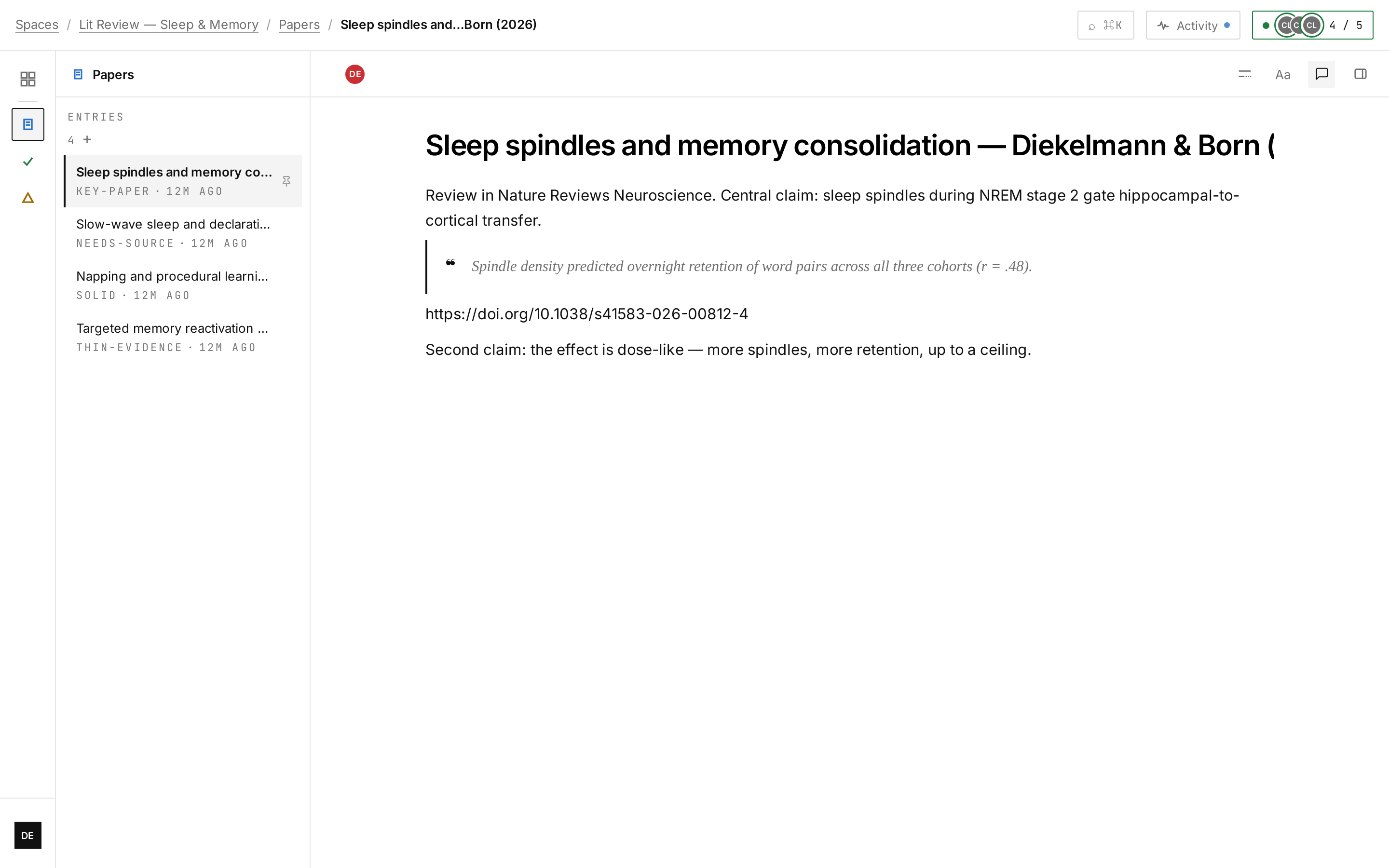
Flagging, not fixing — either add the source or soften the claim.
Fabricated citations stopped being an anecdote and became a statistic: studies this year put AI research tools at 17 to 33 percent hallucinated references, and at least one major firm pulled a published report over invented sources. No 2026 model can be trusted on facts without verification — which means the workflow, not the model, has to carry the trust.
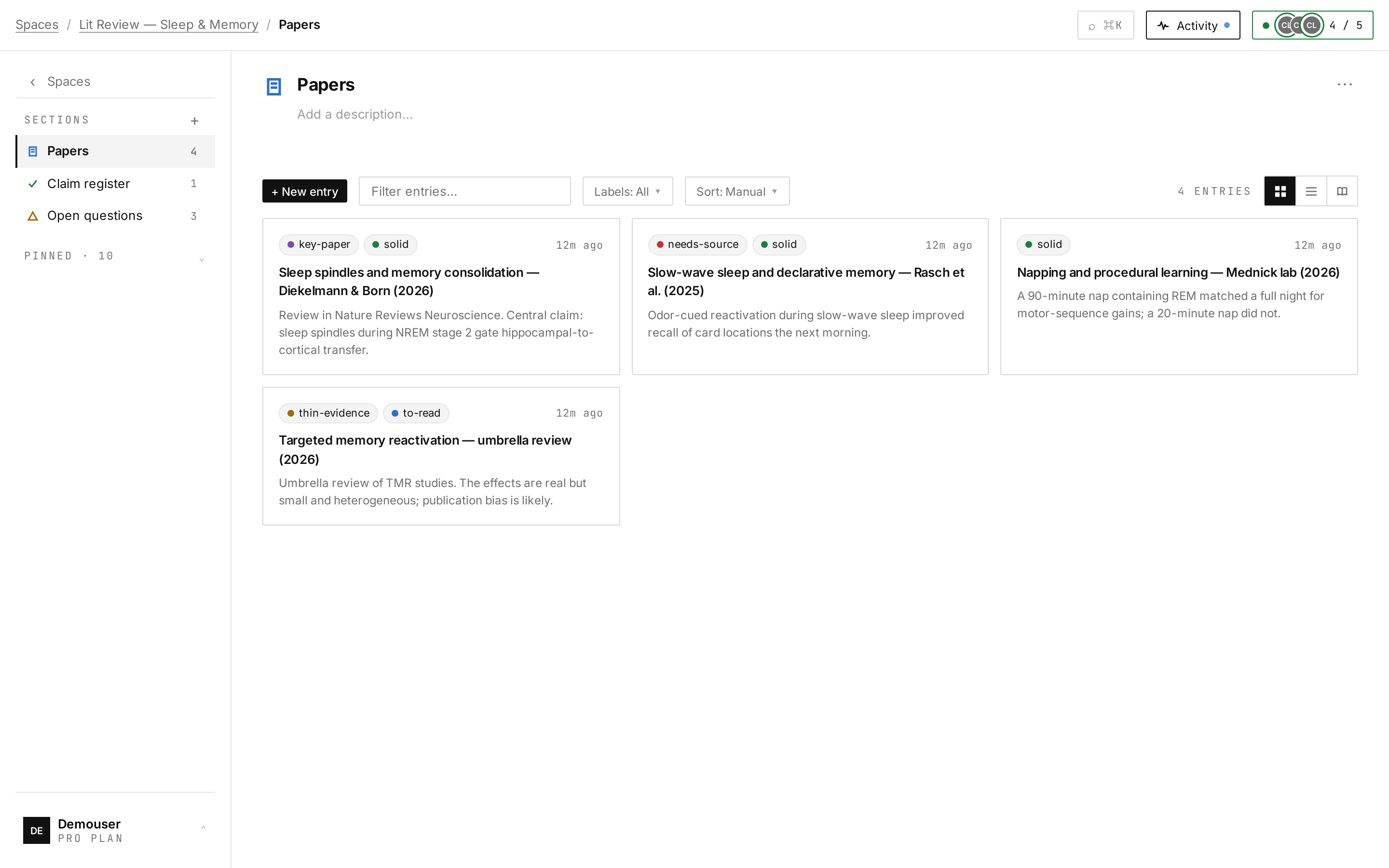
The workflow looks like this: claims live next to their evidence — a quote block and a source line in the same entry — and when a number appears that no linked paper contains, the agent flags it in a comment and fixes nothing. The human decides whether to add the source or soften the claim. The decision, either way, is on the record.
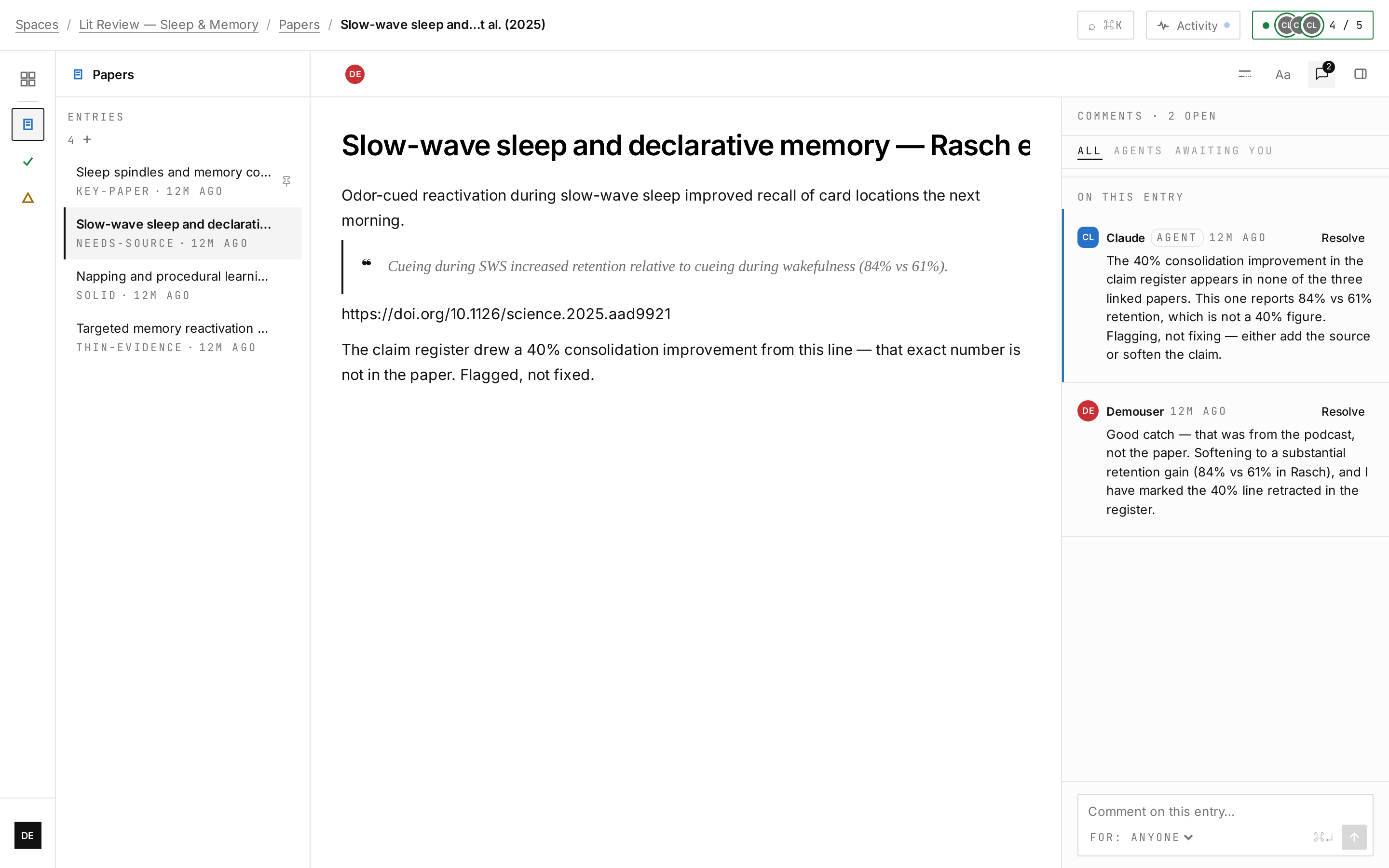
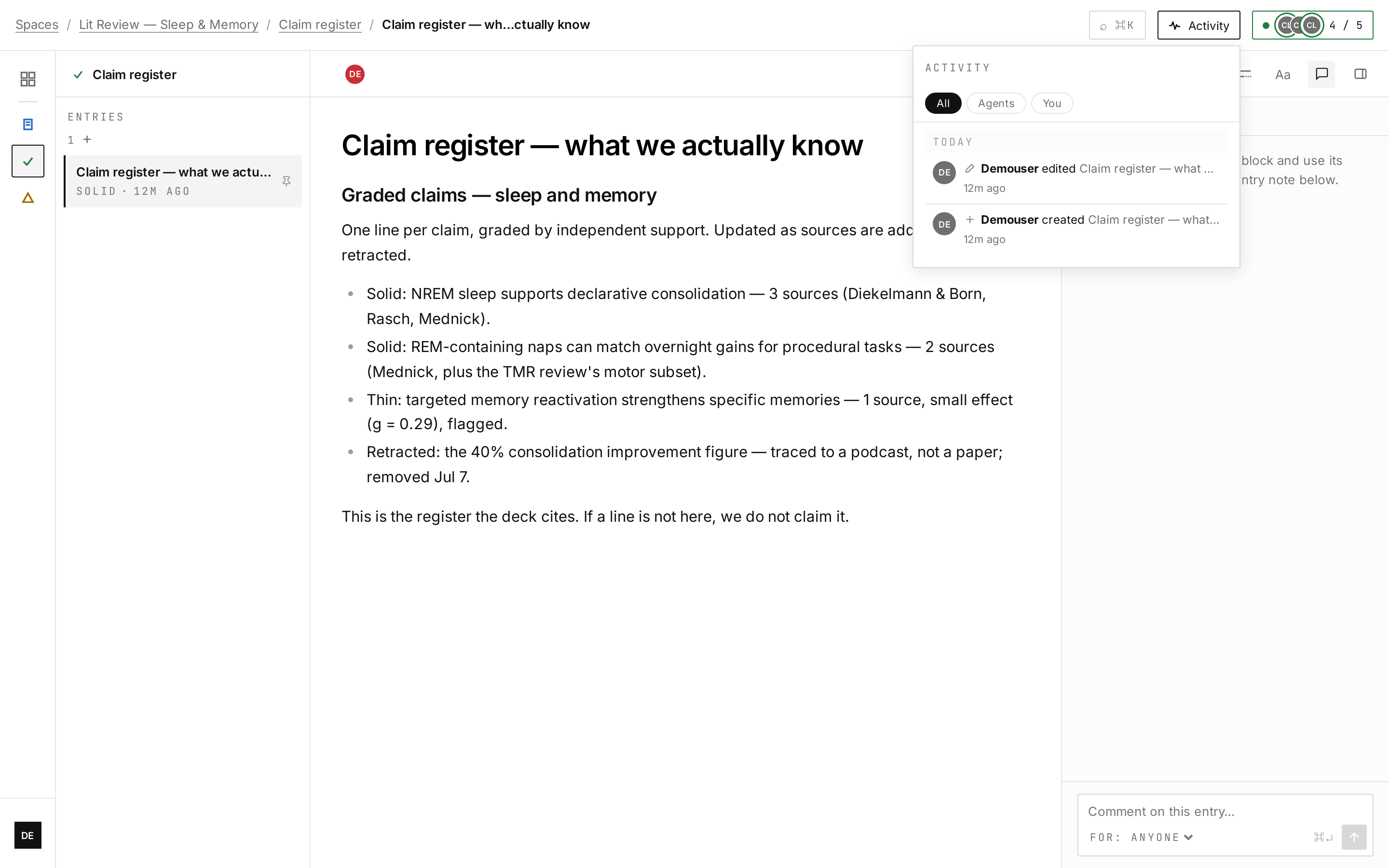
Distillation is where hallucinations usually hide, so the distillation admits its own uncertainty: a claim register graded solid, thin, and retracted, maintained like a ledger rather than an essay.
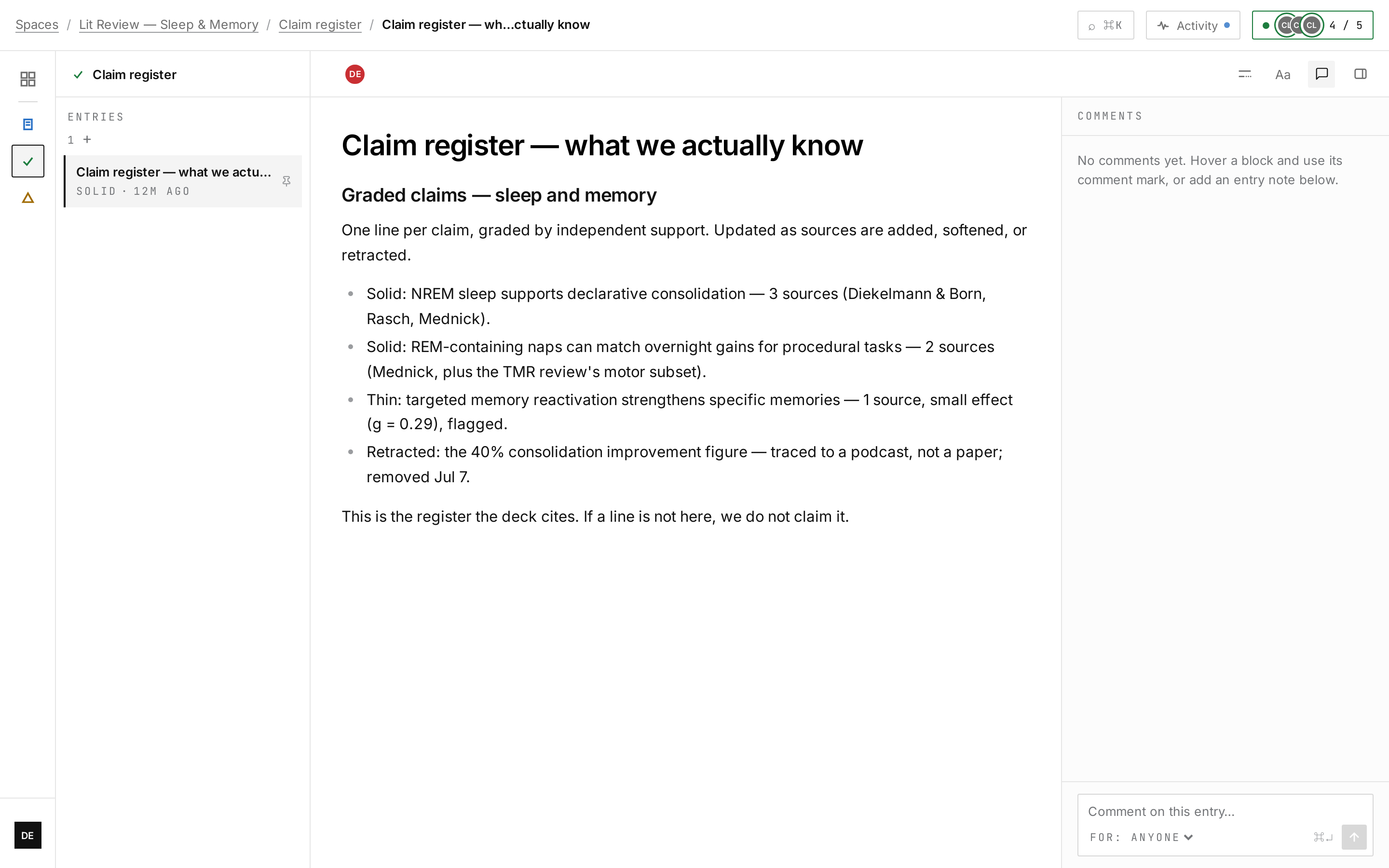
And because the register is versioned and every touch is signed, the audit trail answers the question peer review always asks: who changed this, and when. A softened claim is not a quiet cover-up; it is a visible correction.
The model will still invent. The record no longer lets an invention survive unexamined — and that is the difference between a citation you hope is real and one you can walk back to its source.