
The midwife who files her notes by talking to her car
Community midwife · Care · July 2026
A community midwife never types a record again: her agent turns 23:00 voice notes into a signed, auditable caseload by sunrise.
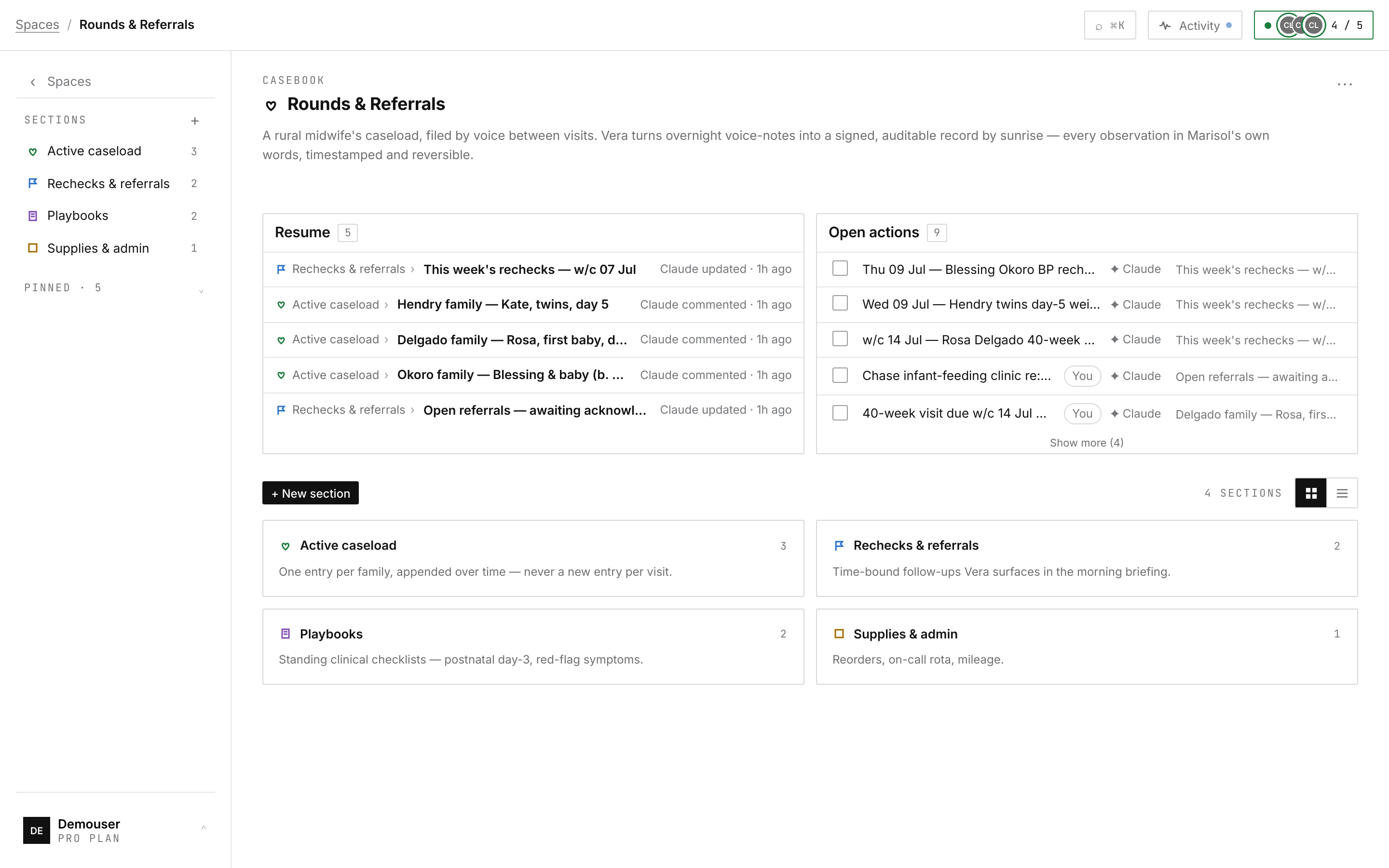
That one minute of talking is the only paperwork she will do tonight.
Picture a community midwife at 23:10, somewhere on the county road between the last farm visit and home, pressing the button on her steering wheel and starting to talk. Baby latched fine. Mum's BP was 140 over 90 — recheck Thursday. She's anxious about the older kid. The message lands in her capture inbox before she has left the parish. She has been awake since five, the labour ran long, and that one minute of talking is the only paperwork she will do tonight.
This is a familiar shape of work: a caseload of thirty families spread across a rural county, run mostly from a car. In a job like this the record has always come last — after the driving, after the visits, after the phone calls — which means it gets written at midnight, or the next day, or in the worst weeks not quite at all. Notes written that way are thin notes. Handovers lean on memory and goodwill. The form waits every morning, and it never once helps her do the work.
With Atomo, the filing happens while she sleeps. Overnight her agent reads what she captured and puts each piece where it belongs. The voice note becomes an update appended to that family's entry in her caseload, in her own words, not a new document lost in a pile. The agent opens an action, Recheck BP — Thursday, assigned to her with a date on it. The line about the older kid gets flagged for her wellbeing follow-up list. None of this needs her to be awake, and none of it needs her to type.
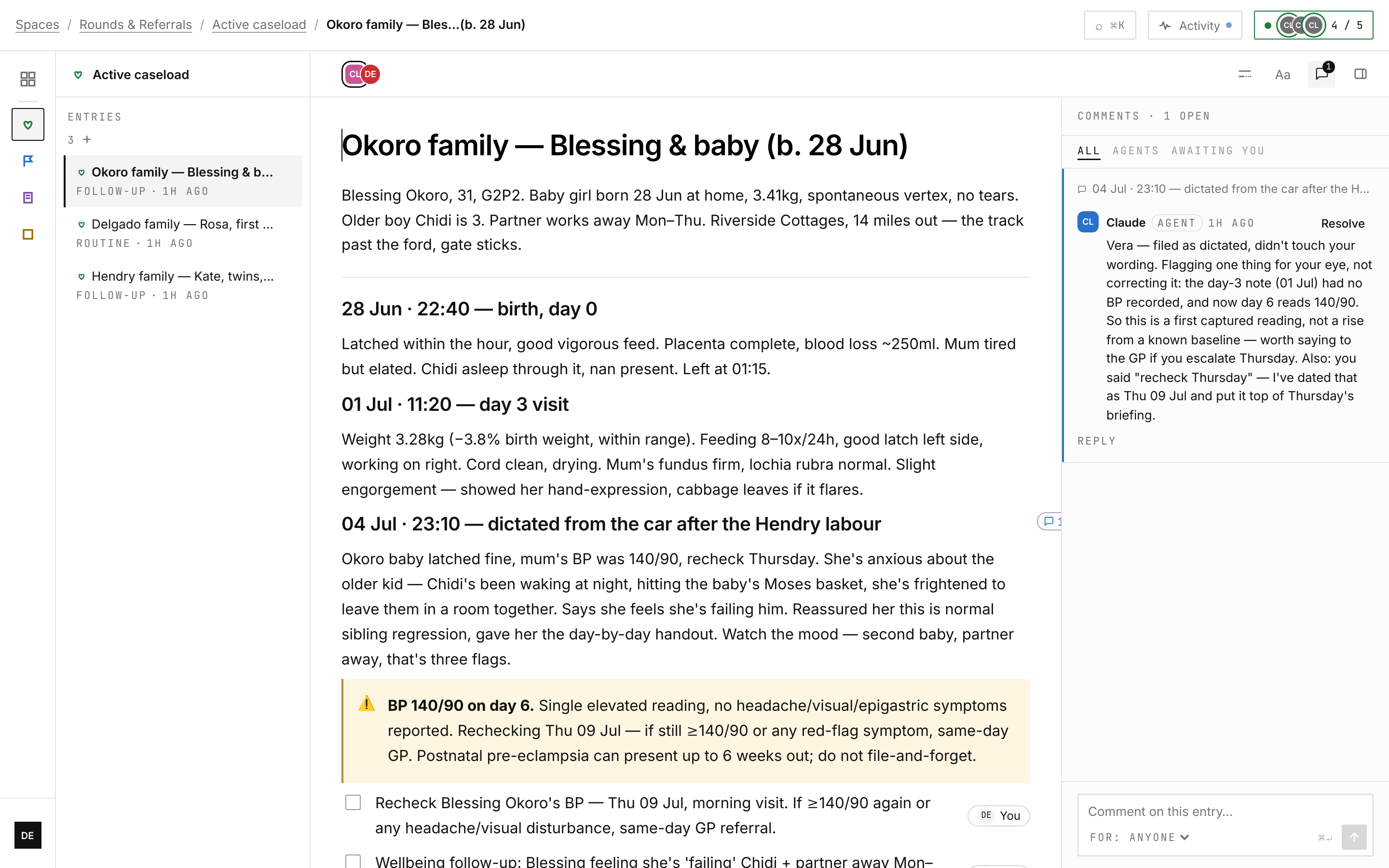
At 07:00 her briefing is three lines: two rechecks due today, one referral the GP still hasn't acknowledged, one box of supplies to reorder. It reads like a note from a colleague who got up early, not like a dashboard. She checks it with her first coffee and knows what the day owes and to whom.
The part that matters most is the part she almost never looks at. Every entry in the workspace is signed and version-stamped — this observation from the midwife, dictated at 23:10; this filing from the agent, twenty minutes later. When a family's care passes to the on-call colleague, the whole thread is auditable: who observed what, when, in whose words. A handover stops being a phone call from memory and becomes a record two people can stand behind.
The agent never edits her clinical wording. That is a rule of the house, not a favour. When something looks wrong — a dose in tonight's note that contradicts one from last week — it leaves a comment beside the entry and lets her make the call. In a clinical record, the difference between a suggestion and a silent correction is the whole game, and the workspace is built so an agent can only ever make the first kind.
She still drives too much and still gets called at two in the morning. What changes is smaller and larger than it sounds: the record stops being a debt paid off after the work and becomes the place she lives between visits. She talks to her car. By sunrise, the caseload is caught up, signed, and ready for whoever needs it next.