
Directing the machines, one signed take at a time
Synthetic-media director · Creative · July 2026
A director reviews an AI crew the way film editors review rushes — accept, note, or roll back — inside a 3D galaxy of motifs.
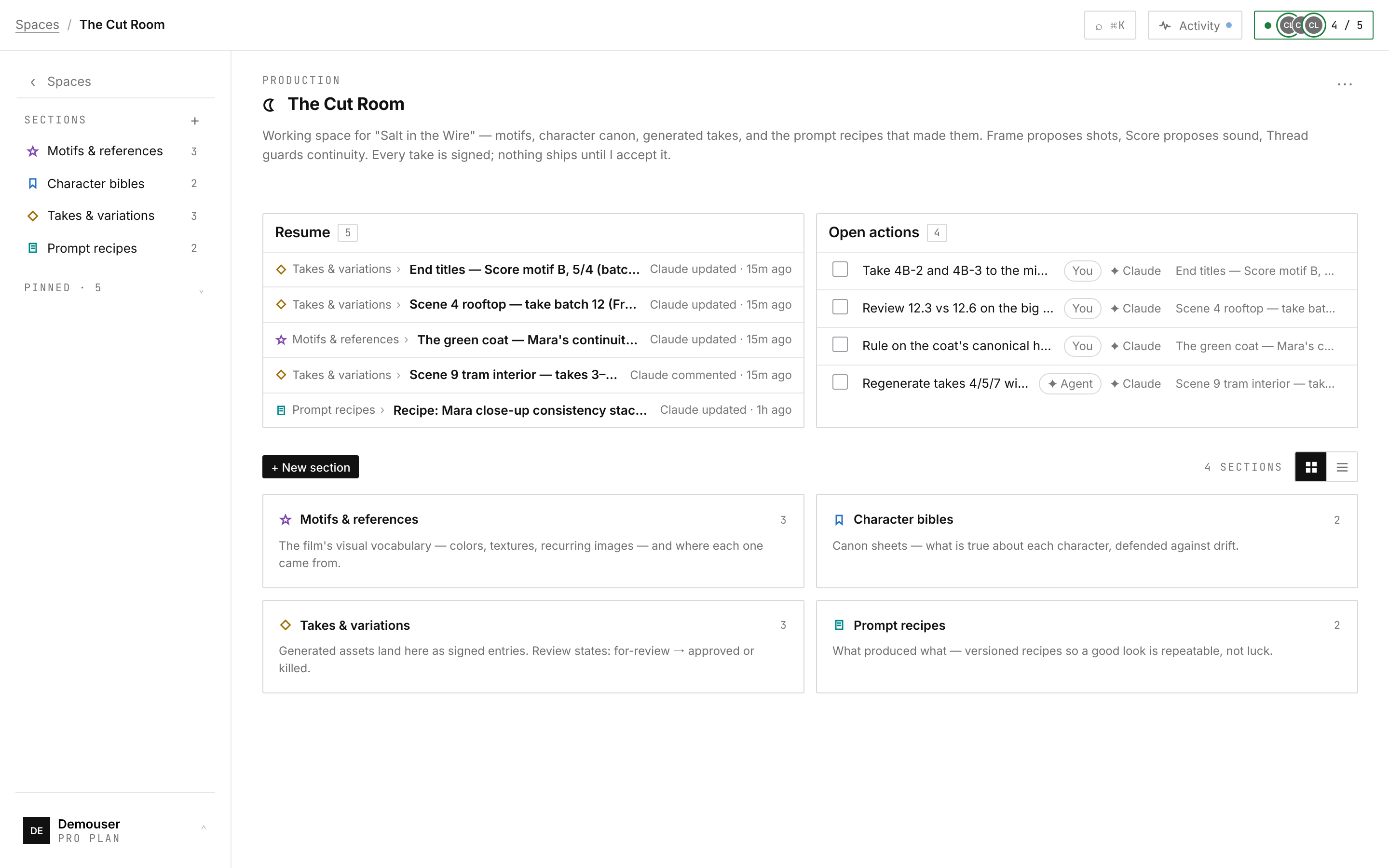
Her agents propose; she disposes. Directing survives when the approvals stay human.
Here is a morning ritual from a job that didn't exist ten years ago. At 06:50 a synthetic-media director sits down to the rushes. Overnight, one of her agents generated eleven variations of the lighthouse shot; each landed in the workspace as its own entry, signed by the agent that made it, thumbnailed, waiting. She kills seven with a label, comments on three — closer, but the fog should swallow the top third — and accepts one into the cut. It is the same ritual film editors have kept for a century. Only the crew is new.
Directing short films made largely by generative models is a craft of deciding what's good, not of making every asset. The title on the invoice — synthetic-media curator, on the days one is needed — didn't exist when she went to film school. She runs three specialist agents: one proposes shots, one proposes music and sound motifs, one guards continuity. Her week is a long, exacting act of review.
That is why the signature on every take matters more than any feature with a bigger name. When your collaborators are machines, the working question of every morning is what changed, who did it, and can I take it back. Every generated variation arrives as a signed entry she can accept, annotate, or roll back through version history. Nothing her agents make overwrites anything she has approved; they propose, she disposes. Directing, it turns out, survives automation precisely when the approvals stay human.
Continuity is where the third agent earns its keep. The coat is green in scene four and blue in scene nine — which is canon? is a real question from a real Tuesday, typed into a thread addressed to the continuity agent the way you'd put a question to a script supervisor. She watches it work: check the character bible, trace both shots to their prompt recipes, come back with the answer and the two entries that disagree. The bible gets a correction; the correction gets a signature; scene nine gets regenerated.
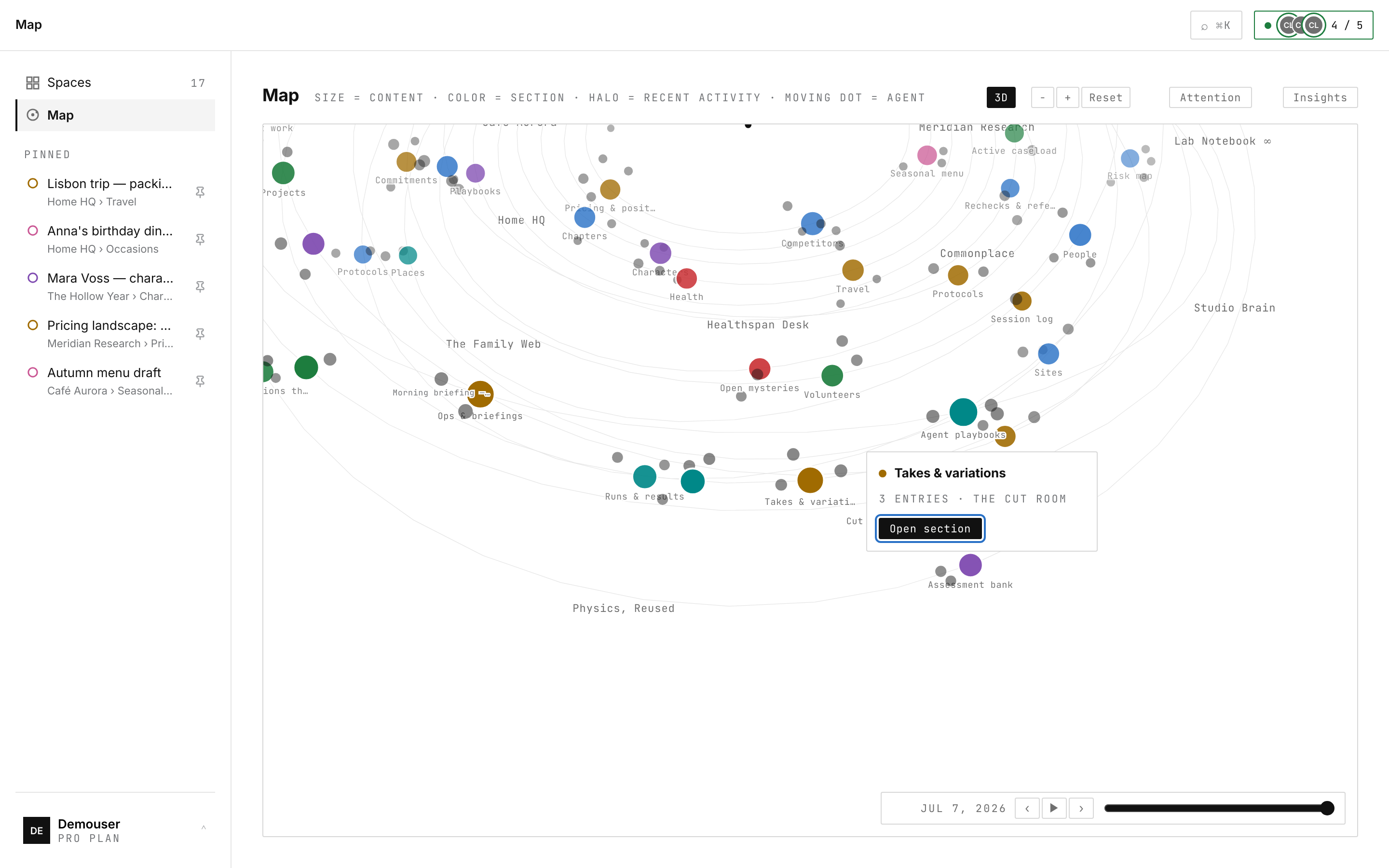
Her workspace looks like the film it will become, because she made looks the point. Every take and reference carries a cover image, so a section reads as a contact sheet rather than a list. And on the 3D map the whole body of work becomes a galaxy: recurring motifs — the fog, the sodium light, the drowned bell — cluster into constellations, and the Connections block ties the color grade she is fighting with today to a reference she saved eight months ago and forgot.
The strangest pleasure is the shelf. The shot agent is allowed to leave an unprompted alt-take there occasionally — never in the cut, never in her sections, just an offering on the side table. Twice now the offering was better than the brief. She accepted both, and signed the acceptance, because in this cut room even serendipity gets attributed.
The lighthouse film locks picture next month. In the credits, the agents are listed under the names she gave them — agents in Atomo can be named — which some people find whimsical. She finds it accurate. She reviewed every one of their takes, kept eleven percent, and can show her working — take by take, signature by signature.