
The lesson you already wrote, two years ago
Physics teacher · Teaching · July 2026
The agent surfaces the analogy that worked two years ago, so teaching stops meaning starting over.
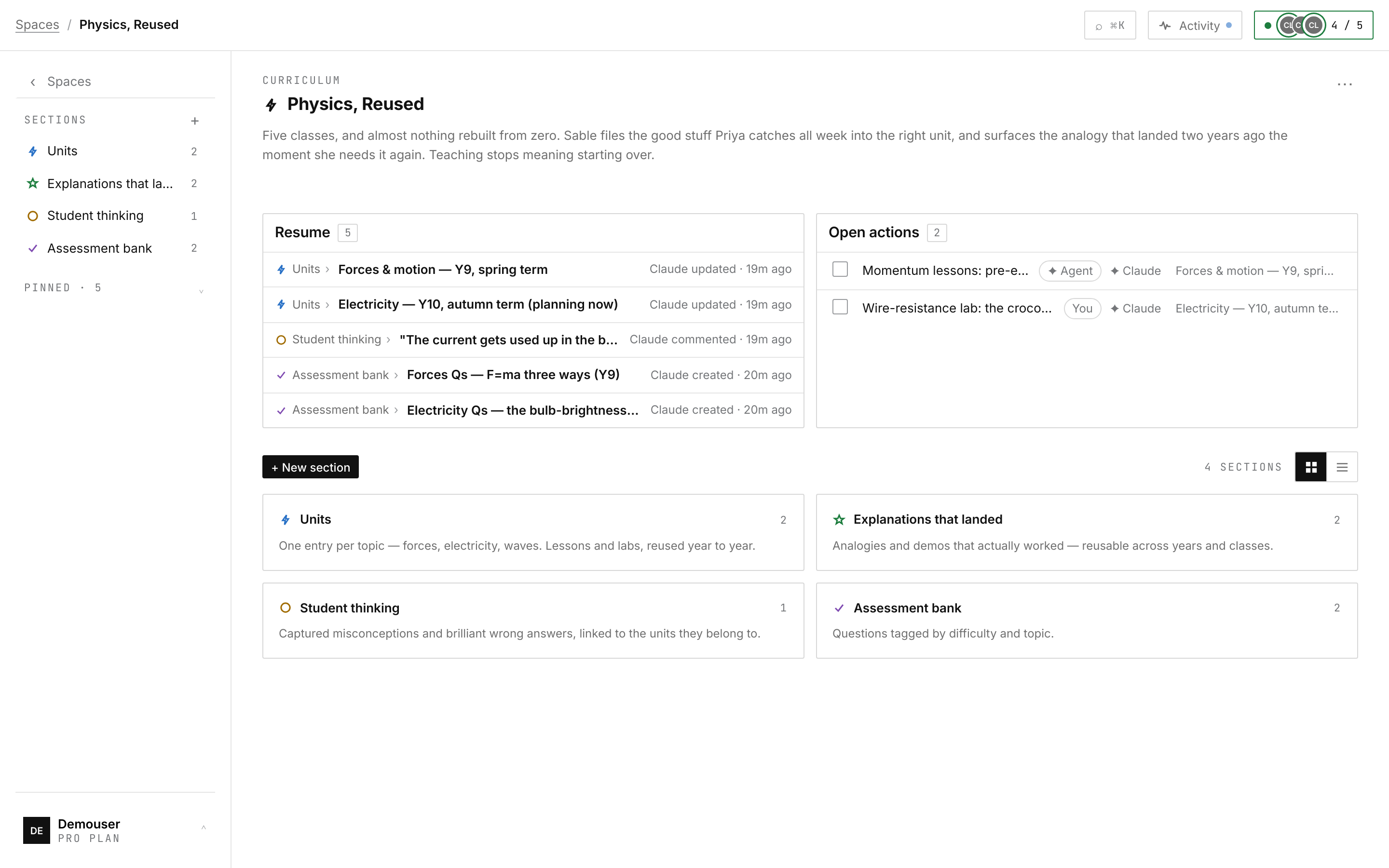
The analogy that worked is back on her desk, forty seconds after she wondered.
Every physics teacher knows this particular Sunday: 21:40, the electricity unit to plan for Year 10, and potential difference to explain for roughly the two-hundredth time in a career. Somewhere, she knows, there is a version of this lesson that worked — the one with the analogy that made a difficult class go quiet in the good way. It was two years ago. It is in a folder, or an old notebook, or nowhere.
A teacher with five classes reuses almost nothing efficiently. The good explanations, the demonstrations that landed, the brilliant wrong answers that reveal exactly how students misunderstand a topic — they happen all year long and evaporate by the next one. The problem was never a failure to write things down. It is that nothing written down could find its way back at the moment it was needed. Every September the cycle resets: new classes, new folders, the same topics rebuilt from scratch, as if the last five years of good teaching had happened to someone else.
In Atomo, her space starts from a template — a ready structure of units she clones for each topic rather than a blank page — and it fills itself in around her week. When she captures something worth keeping, in the staffroom or mid-lesson — an analogy a colleague tossed off, a student's wonderfully wrong answer about momentum, a simulation link — her agent files it into the matching unit overnight. She never files anything herself. She just doesn't lose things anymore.
The difference shows up on nights like this one. Planning the electricity unit, she searches for what she means rather than what she typed, and the workspace answers with the entry she wrote two years ago about momentum — because the misconception underneath is the same one, and the search runs on meaning, not keywords. The Connections block on the lesson quietly lists the related entries she would never have thought to look for. The analogy that worked is back on her desk, forty seconds after she wondered about it.
Drafting is lighter too. When she writes the fortieth worksheet explanation of Ohm's law, ghost text finishes her sentences in her own register — hers to accept with a keystroke or ignore entirely, and on the fortieth explanation it is a genuine mercy. When she opens a section she hasn't filled yet, she is met by Ato, the small pixel mascot, instead of a void. It is a small kindness, and at 22:00 on a Sunday, small kindnesses count.
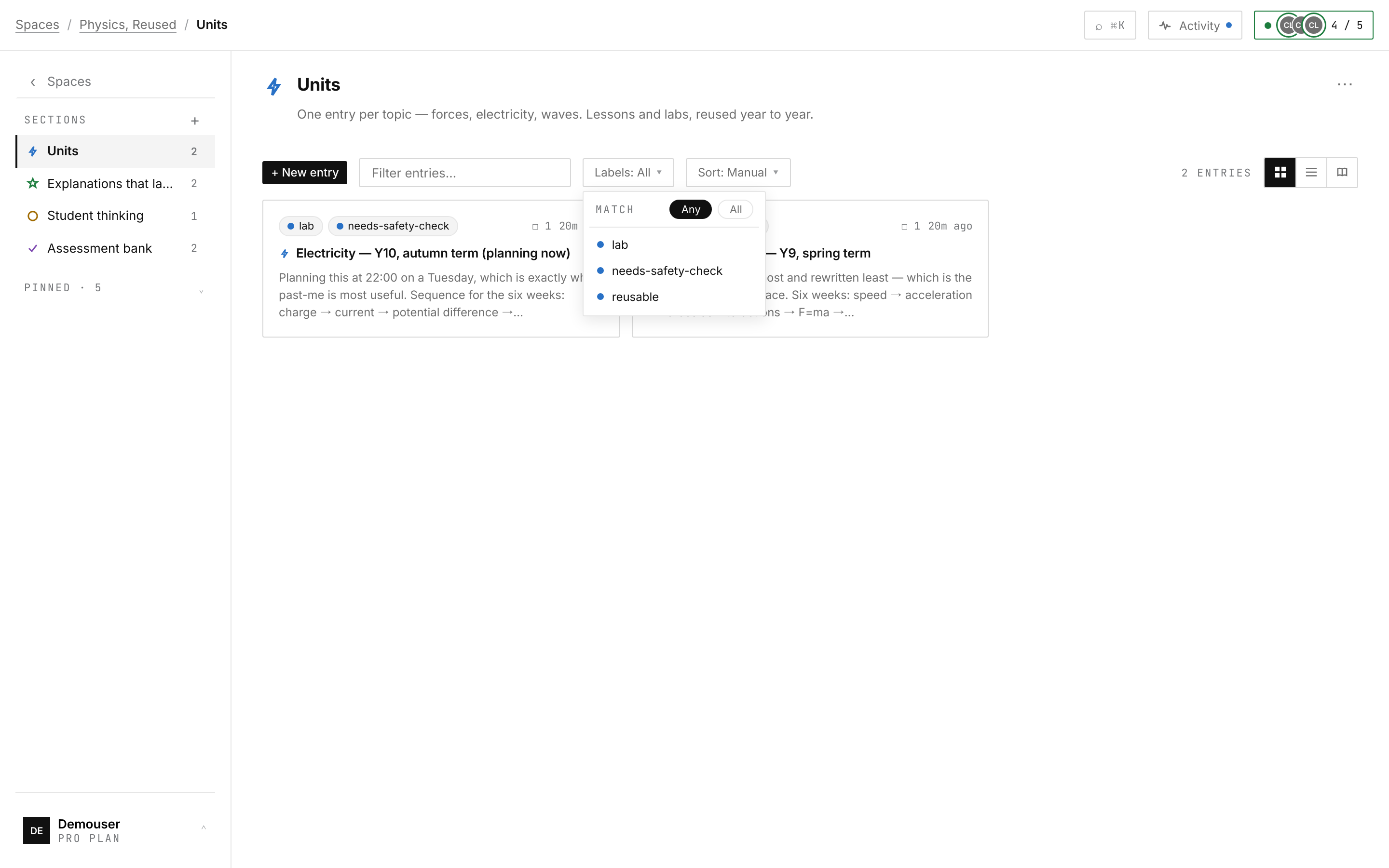
The agent follows one rule everywhere: it never rewrites her lessons. When a practical is missing its safety note, it leaves a comment saying so — visible, signed, easy to act on — and the plan stays exactly as she wrote it until she changes it. The lesson is hers. The filing, the finding, and the flagging are the agent's.
The electricity unit goes out on Tuesday with the two-year-old analogy in it, improved by one better diagram. Next year it will come back on its own, along with whatever this year's students get brilliantly wrong. Teaching stops meaning starting over.