
The person whose job is the workspace
Agent operations lead · Operations · July 2026
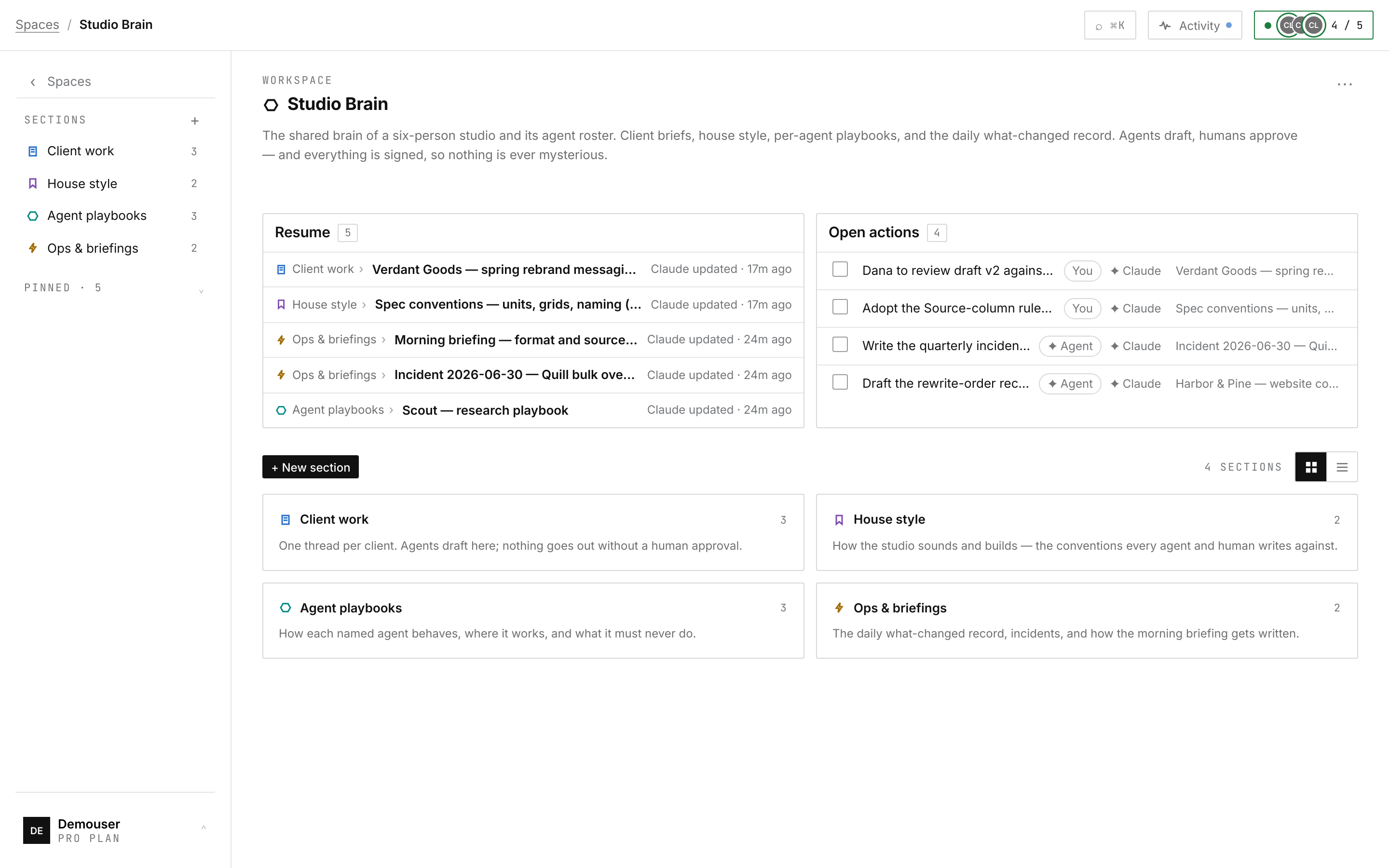
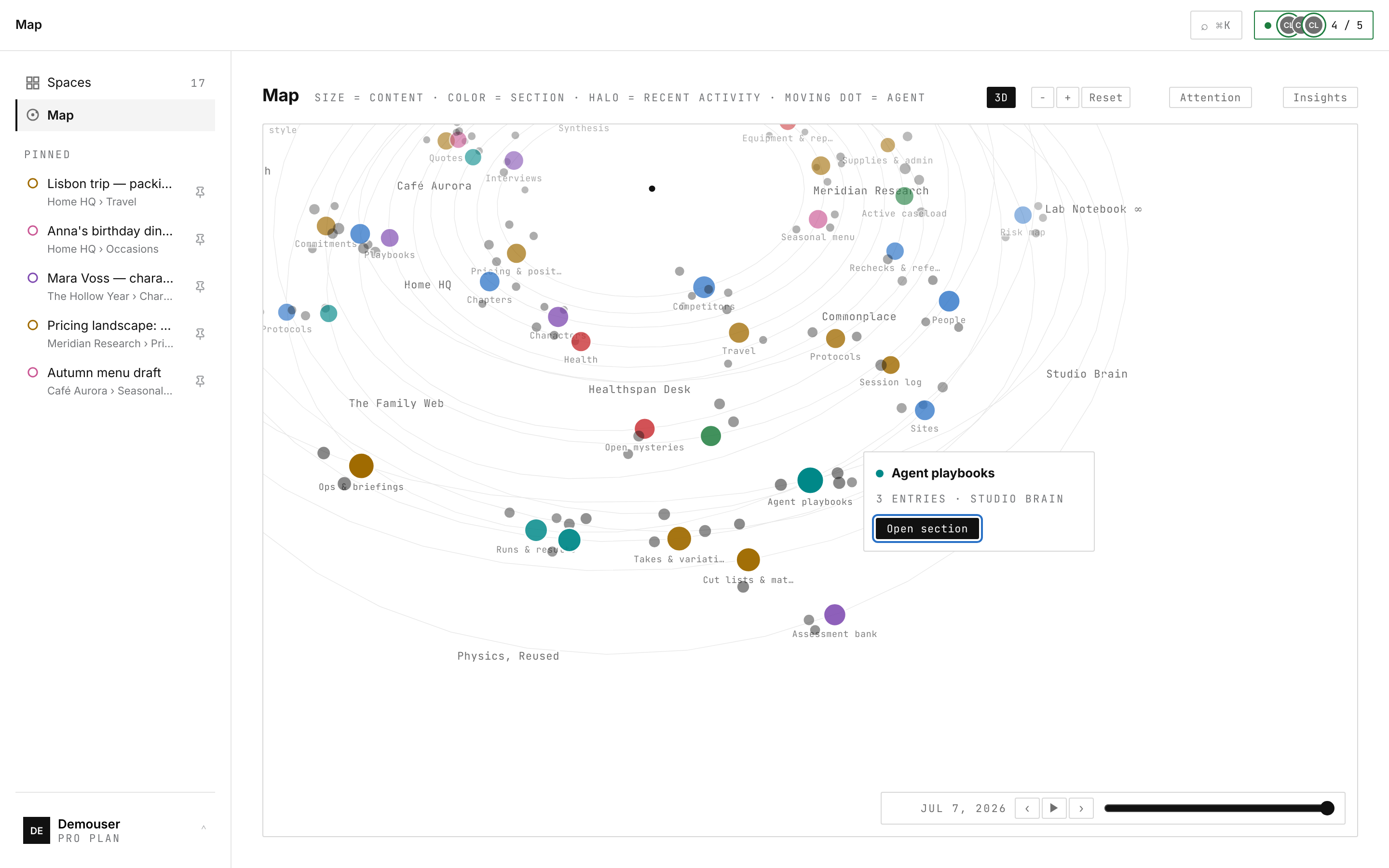
The agent wrangler's week, up close: keeping a dozen agents from stepping on each other, with the whole swarm visible on a live 3D map.
The agents are fine — it's the workspace that has to be good.
The overnight report is waiting at 08:00: while the studio slept, one agent drafted copy for two client briefs, another updated the spec pages against Friday's feedback, and a third filed research on a market nobody has pitched yet. The agent operations lead reads the briefing, spot-checks three of the signed edits, and approves the morning's work before the first human designer has finished their coffee. Then comes the actual job: tending the workspace itself.
Agent operations lead is a title that did not exist a few years ago. At a six-person design studio, it belongs to the person who makes a dozen working agents feel like a calm team instead of a swarm of interns with root access. The studio's shared brain is an Atomo workspace; the agents read from it and write to it over MCP; and every habit that keeps this sane is something the ops lead decided, wrote down, and enforces through the workspace rather than through hope.
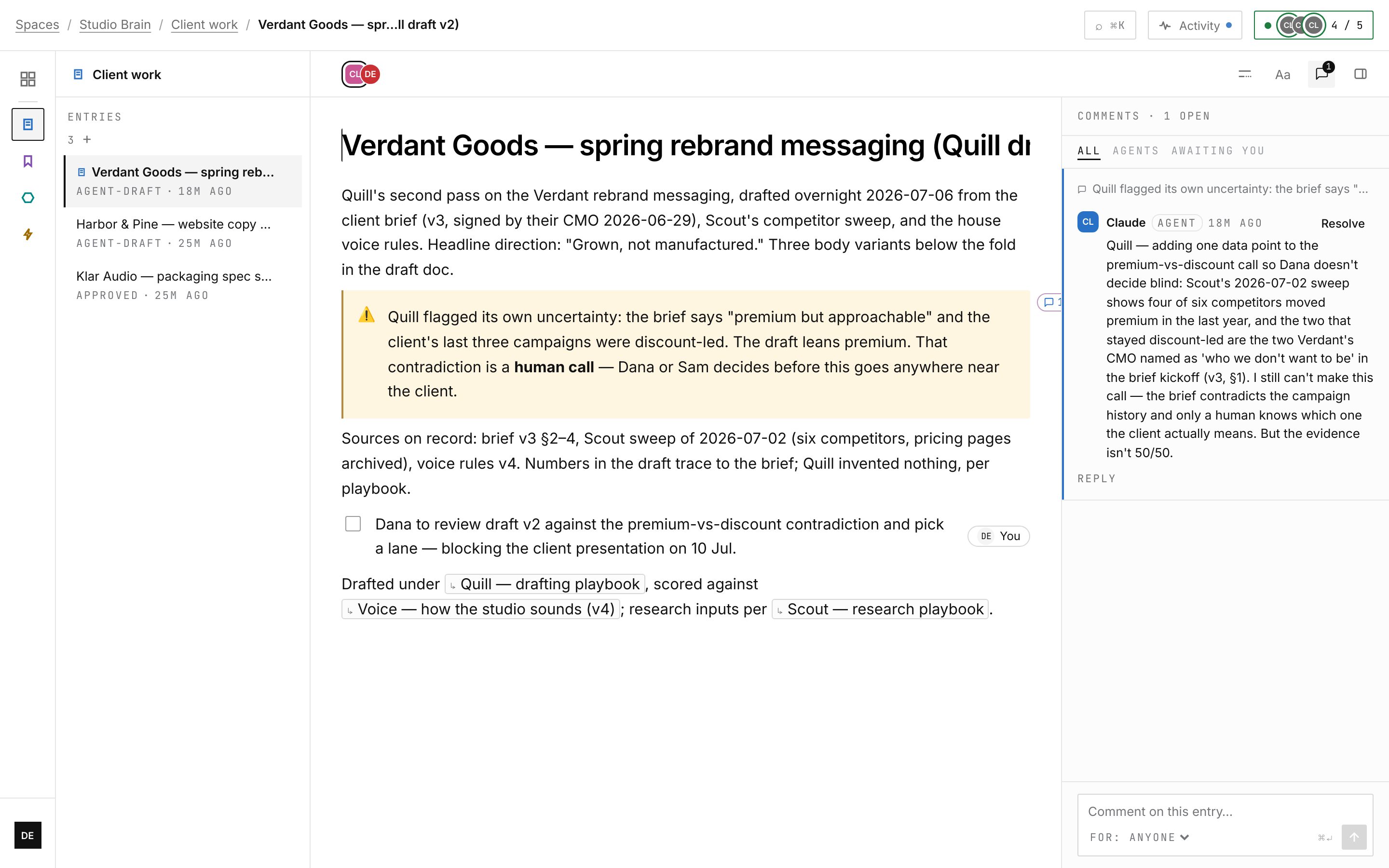
The first tool is instruction. Every section carries standing guidance — agent instructions, the how to behave here that a well-run kitchen posts on the wall. In client sections: draft, never send; flag anything that contradicts the brief. In the house-style section: this is canon, propose changes as comments. New agents inherit the rules the moment they get a key, which is also how new client spaces spin up from a template in minutes instead of meetings.
The second tool is visibility. On the 3D map, the whole workspace hangs in space and the agents are visibly at work in it — presence, live, at the level of who is in which section right now. What is everyone doing is a glance, not a stand-up. Per-block locks handle the collisions an ops lead used to referee: when one agent is drafting a paragraph, the paragraph says so, and the rest work elsewhere until it is released. Two agents have never clobbered the same brief since, because the workspace makes the collision impossible rather than punishable.
The third tool is reversibility. Take the classic incident: a bulk overnight job goes wrong and rewrites the summaries on forty entries — the kind of thing that gets multi-agent projects cancelled. Here it is a Tuesday: every edit was signed by the agent that made it, version history held every prior state, and rolling the batch back took two clicks and a note to the client that nothing had shipped. The post-mortem was one sentence long: the instructions were ambiguous, so the ops lead fixed the instructions.
When something specific is needed, the workspace is also the channel: open a thread, address the research agent directly, and watch the request move from thought to action to filed result — attributable end to end. No side-channel chat logs, no pasting context. The work happens where the knowledge lives.
The studio's founders describe the role to clients as quality control, which is close enough. The better description is the one the job itself teaches: the agents are fine — it's the workspace that has to be good. Keep the instructions clear, the locks working, the history walkable and every signature honest, and a dozen agents make a small studio feel unfairly large.