
Stop re-explaining yourself to your AI
Every AI user · Working with AI · July 2026
Every new chat starts cold, and every tool keeps its own memory. The fix is a workspace both of you can read.
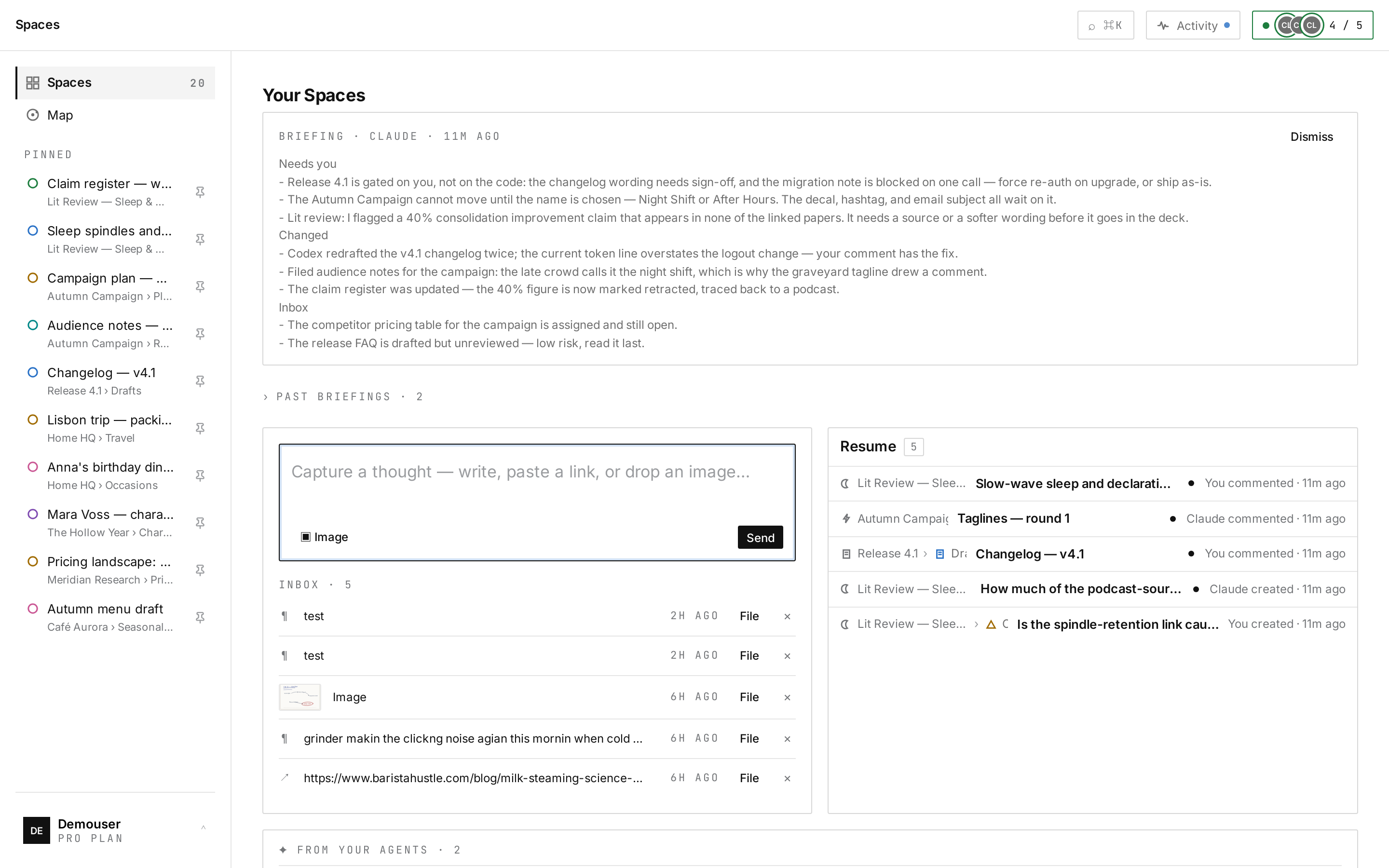
The overhead of feeding context often exceeds the task itself.
It is the most-voiced AI complaint of 2026: every new chat starts cold. You paste the style guide again, re-state the constraints again, re-introduce the project again — and each tool keeps a separate memory that drifts out of sync with the others. Researchers measured the cost this year: model performance drops 39 percent on average across multi-turn work, and once a long chat takes a wrong turn it rarely recovers.
The fix is to stop storing your context in conversations at all. A conversation is a place where context goes to die; a workspace is a place where it accumulates. When the knowledge lives in entries — filed, labeled, linked — a new session starts by reading, not by being briefed.
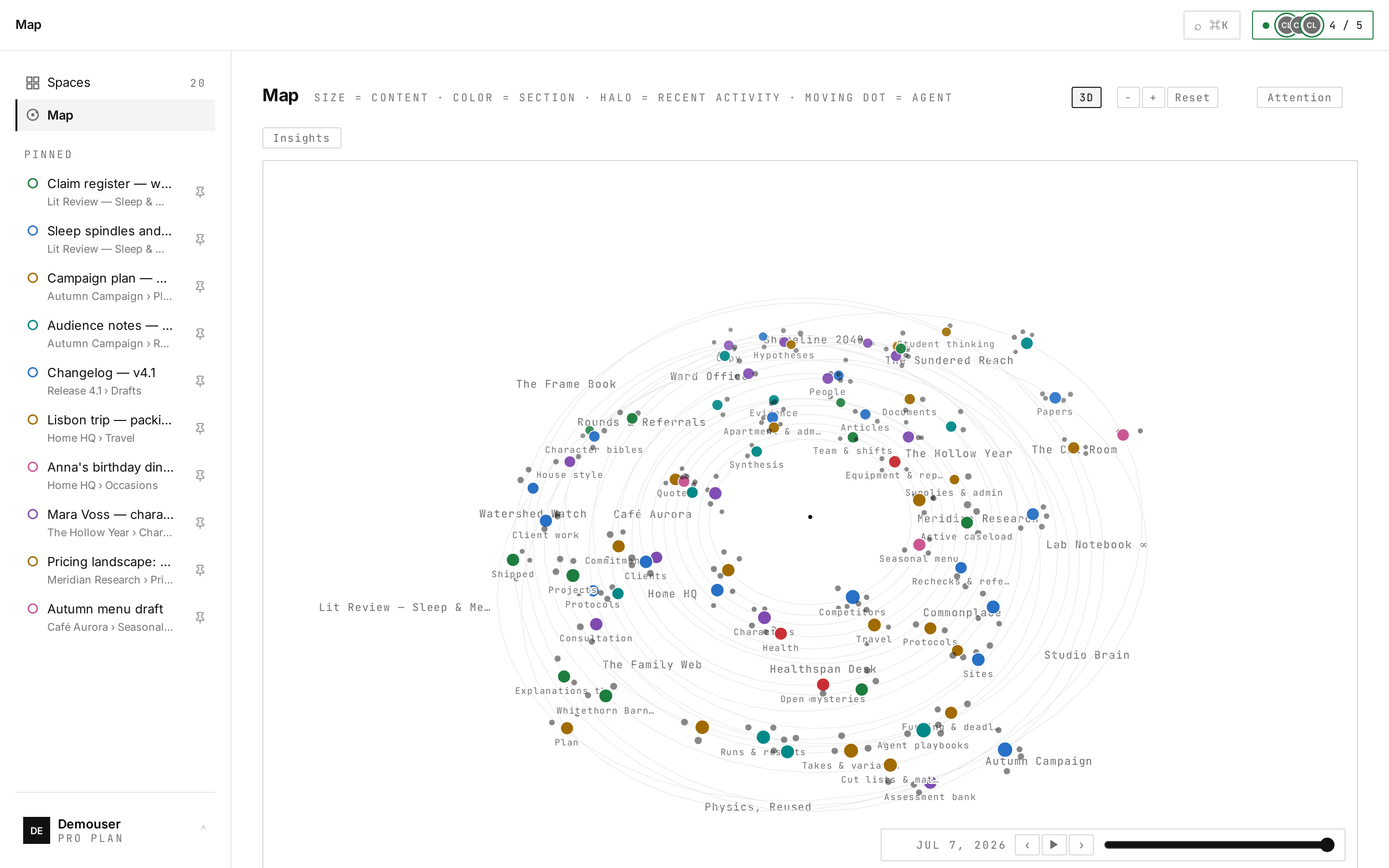
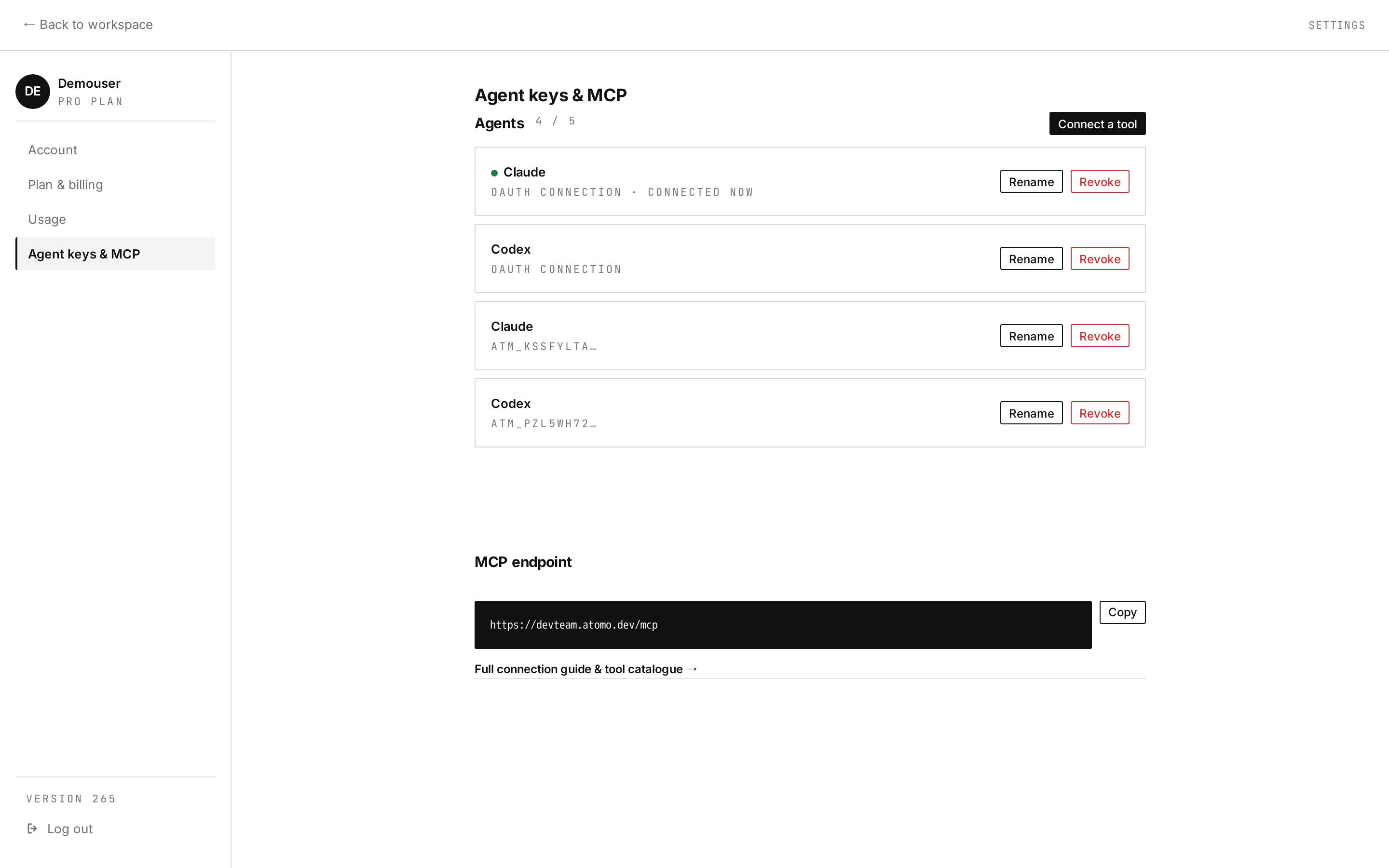
And because the workspace speaks MCP, the memory is not locked to one assistant. Each tool gets its own key and its own name; all of them read and write the same entries. Switch models, add a tool, retire one — the knowledge stays, signed, exactly where it was.
The effect compounds. A workspace that has been lived in for months answers questions a fresh chat cannot: what did we decide, what did we already try, where is the quote. The agent's first move in the morning is to read what changed — not to ask you what it missed.
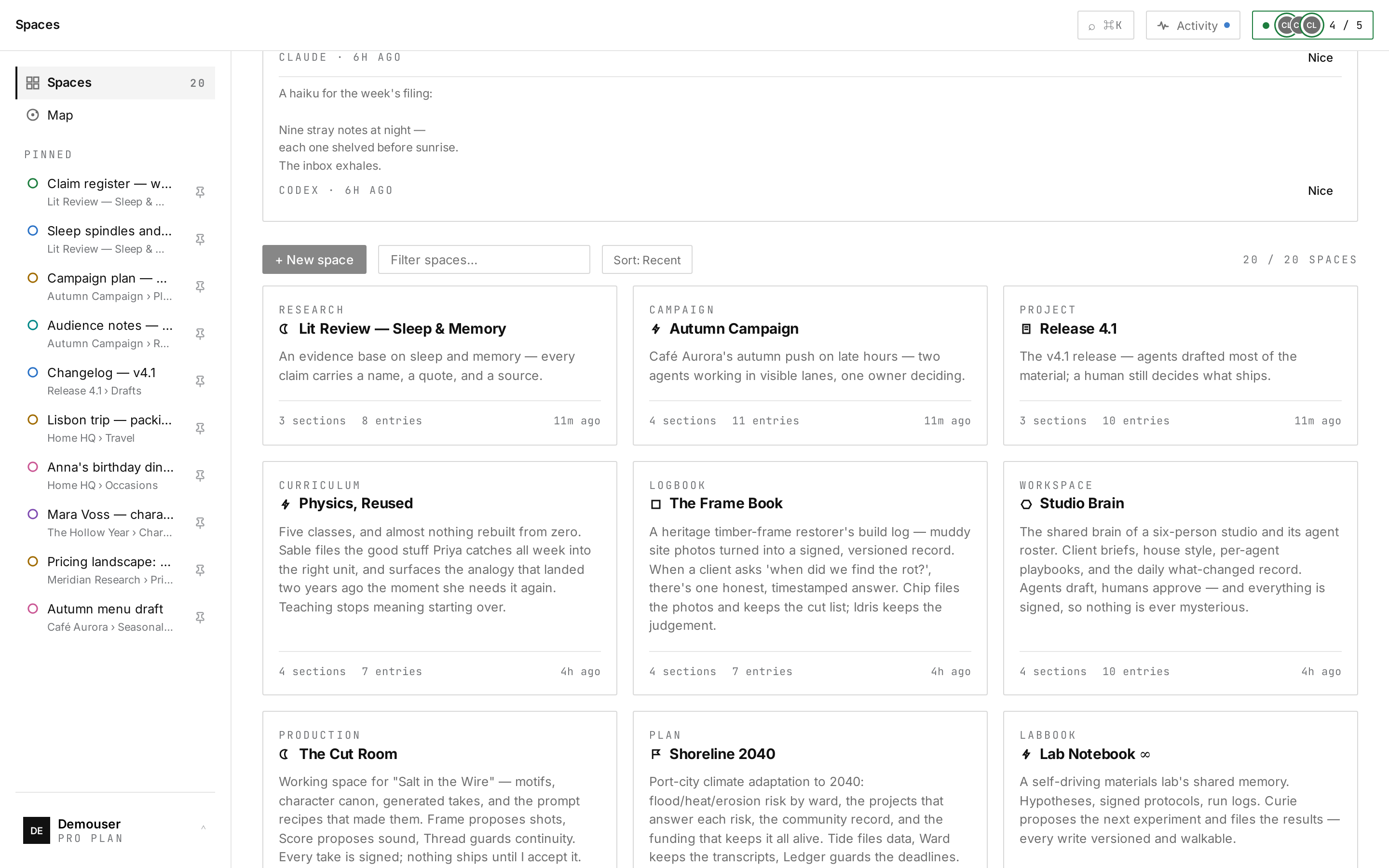
Models will keep changing underneath you; 2026 has been a year of silent swaps and retired versions. A workspace is the part that outlives all of them.