Two agents, one desk, nobody steps on anybody
Multi-agent teams · Working with AI · July 2026
Multi-agent setups fail where they share nothing. Give them one workspace, visible lanes, and a rule: comment, never overwrite.
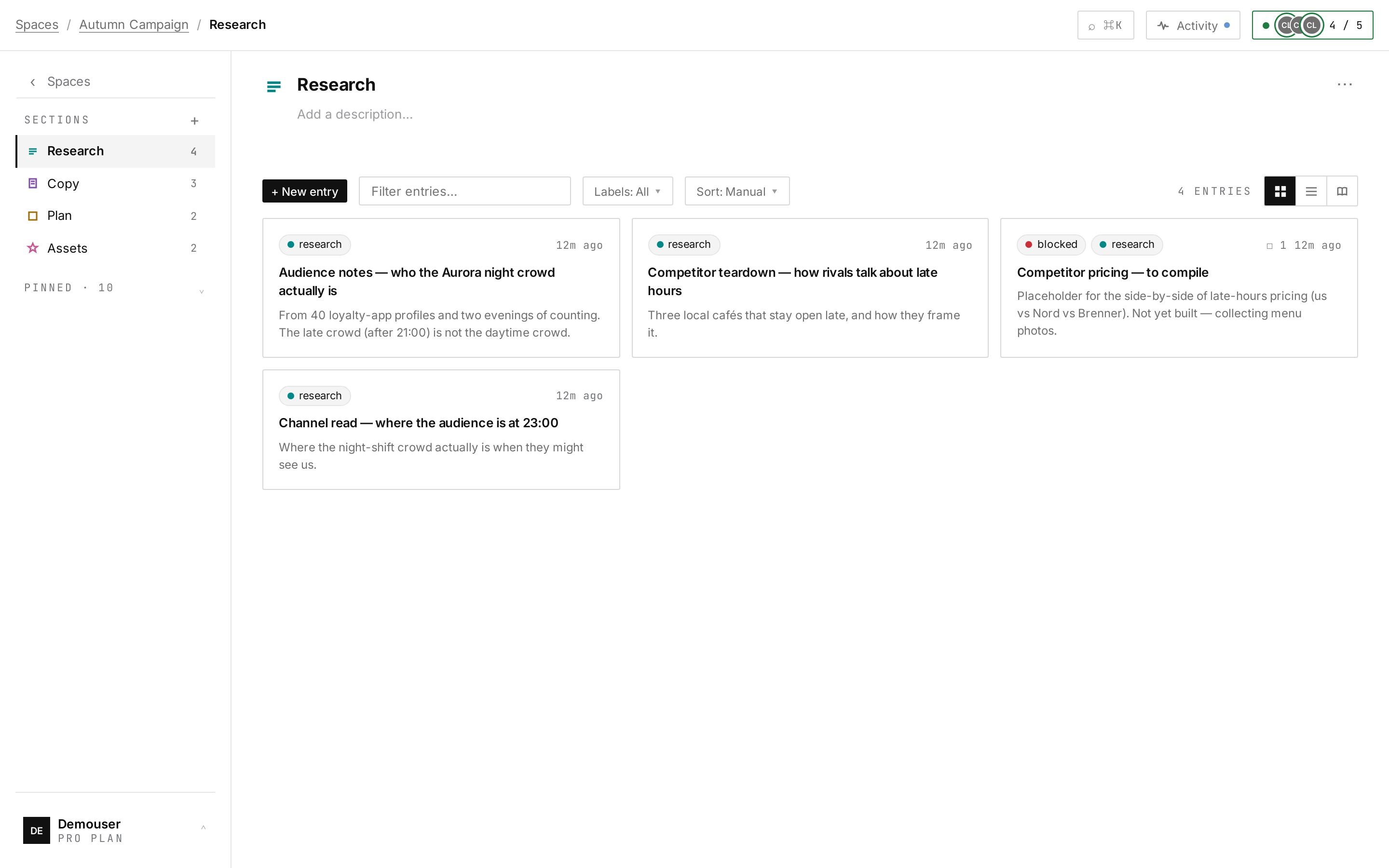
The lane is written where the agent works, not buried in a prompt.
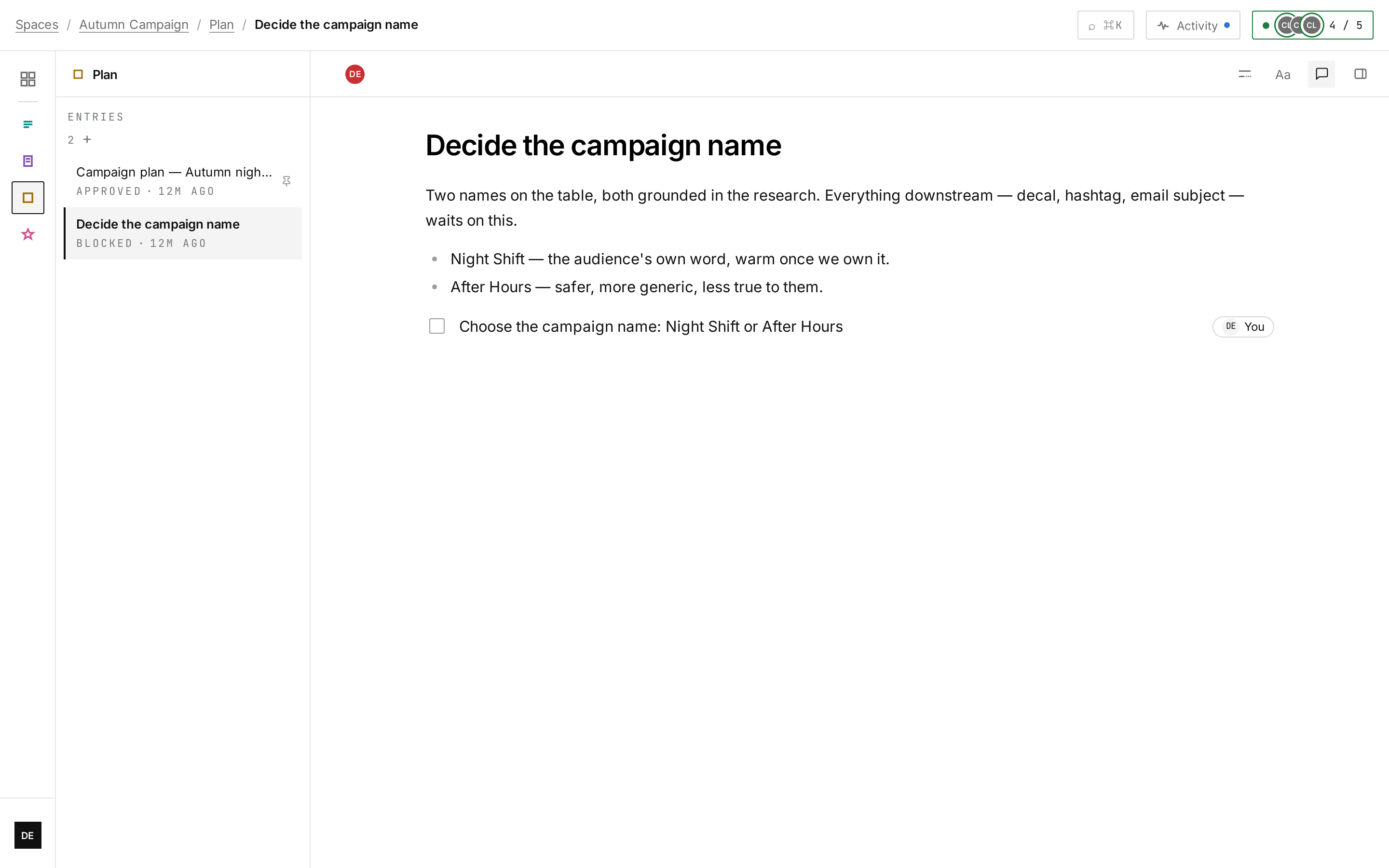
The 2026 postmortems on multi-agent setups keep finding the same failure: agents exchange messages but not intent. A frontend agent sees a database report in its context and helpfully tries to fix the schema. Two agents, each locally sensible, quietly undo each other — because nothing tells them whose lane is whose.
Lanes fix it, if the lanes are visible where the work happens. In a shared workspace each section carries its own instruction — file findings here, draft copy there, never edit across — and every agent reads the rule the moment it enters the room. No prompt archaeology required.
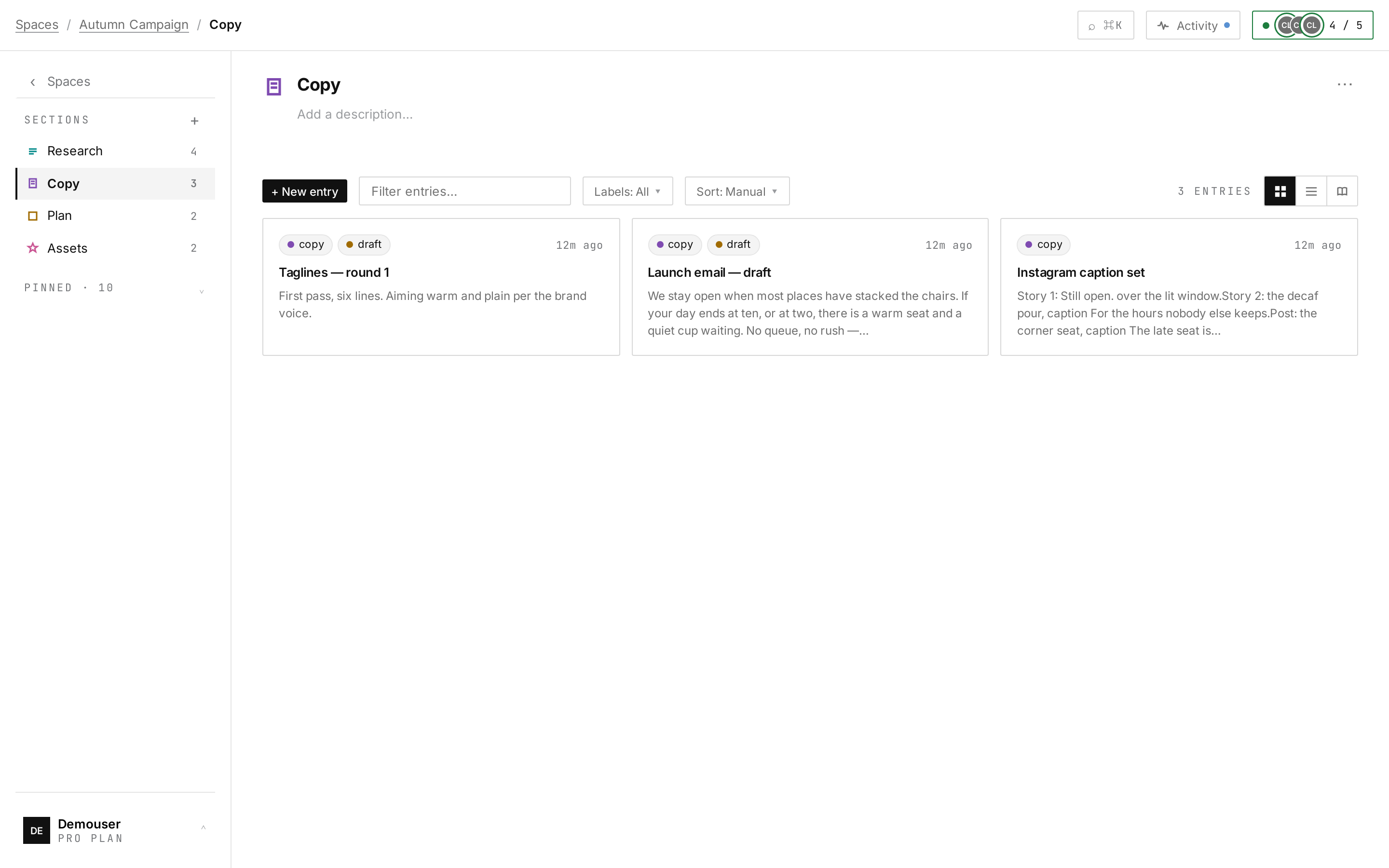
Disagreement still happens; the trick is what it is allowed to do. When the research agent thinks a tagline contradicts the audience findings, it says so in a comment — signed, beside the line, explicitly not touching it. The copy stays the copywriter-agent's; the objection stays on the record.
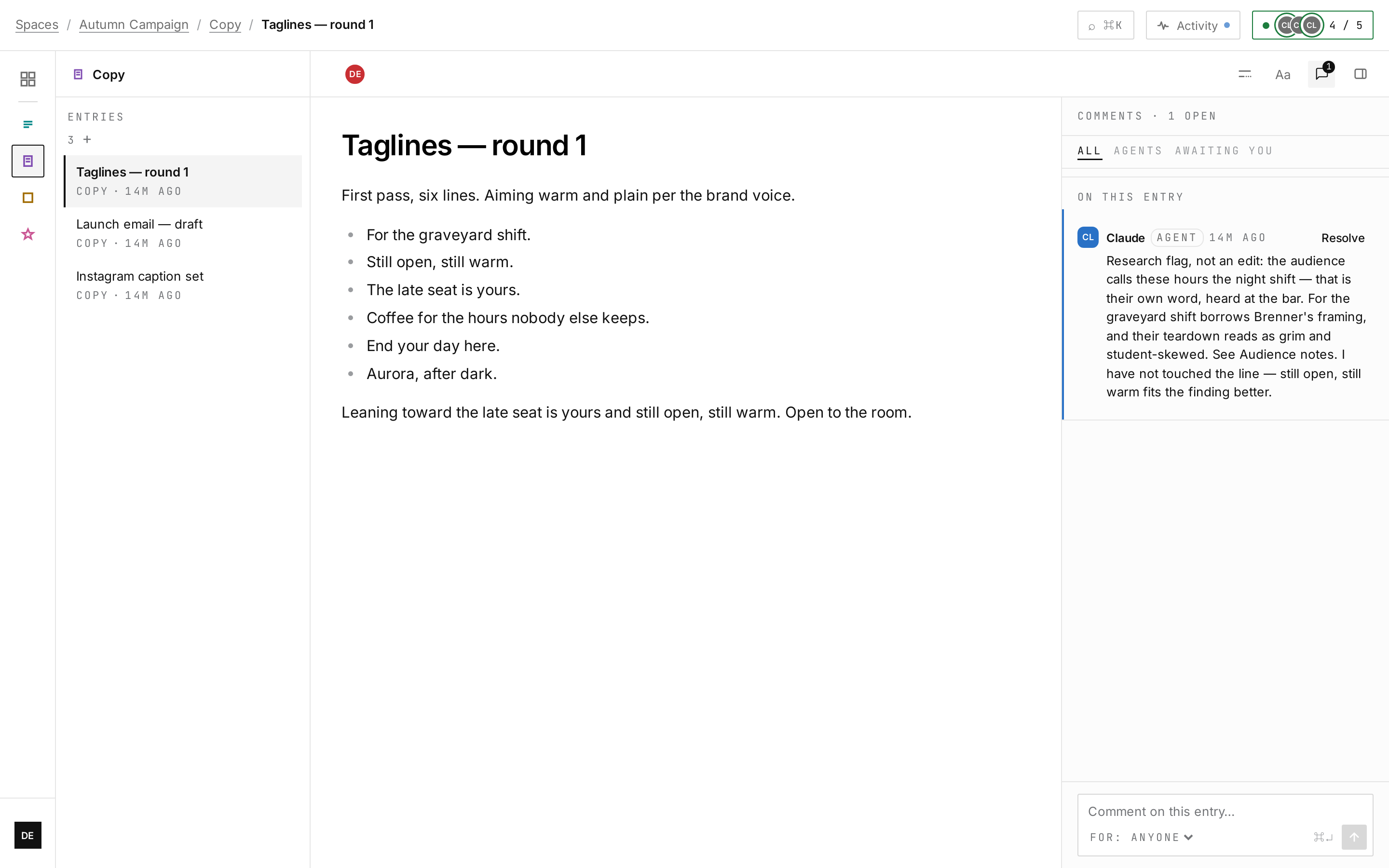
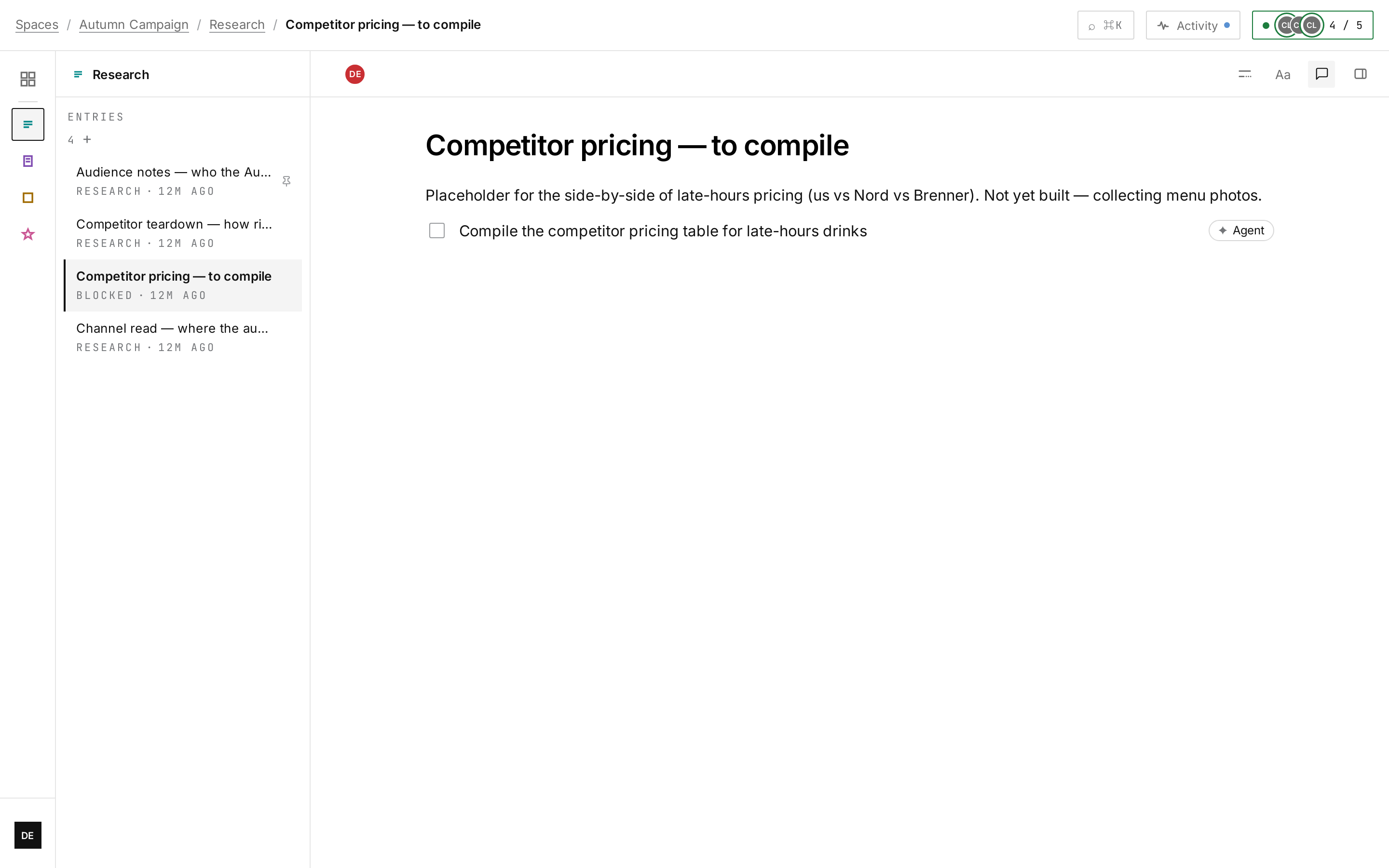
Routing is explicit too. Actions carry assignees: the pricing table compile belongs to an agent, the campaign-name decision belongs to the human, and both facts are visible to everyone in the space. Nobody discovers a colleague's work by tripping over it.
One desk, clear lanes, signed voices. Multi-agent coordination stops being an orchestration problem and becomes what it always was on good teams: a shared room with house rules.