
When 300 volunteers become one signal
Biodiversity coordinator · Science · July 2026
The agent files the field notes and spots the early spring across a whole watershed — the moment citizen science becomes discovery.
The click when scattered attention becomes one observation.
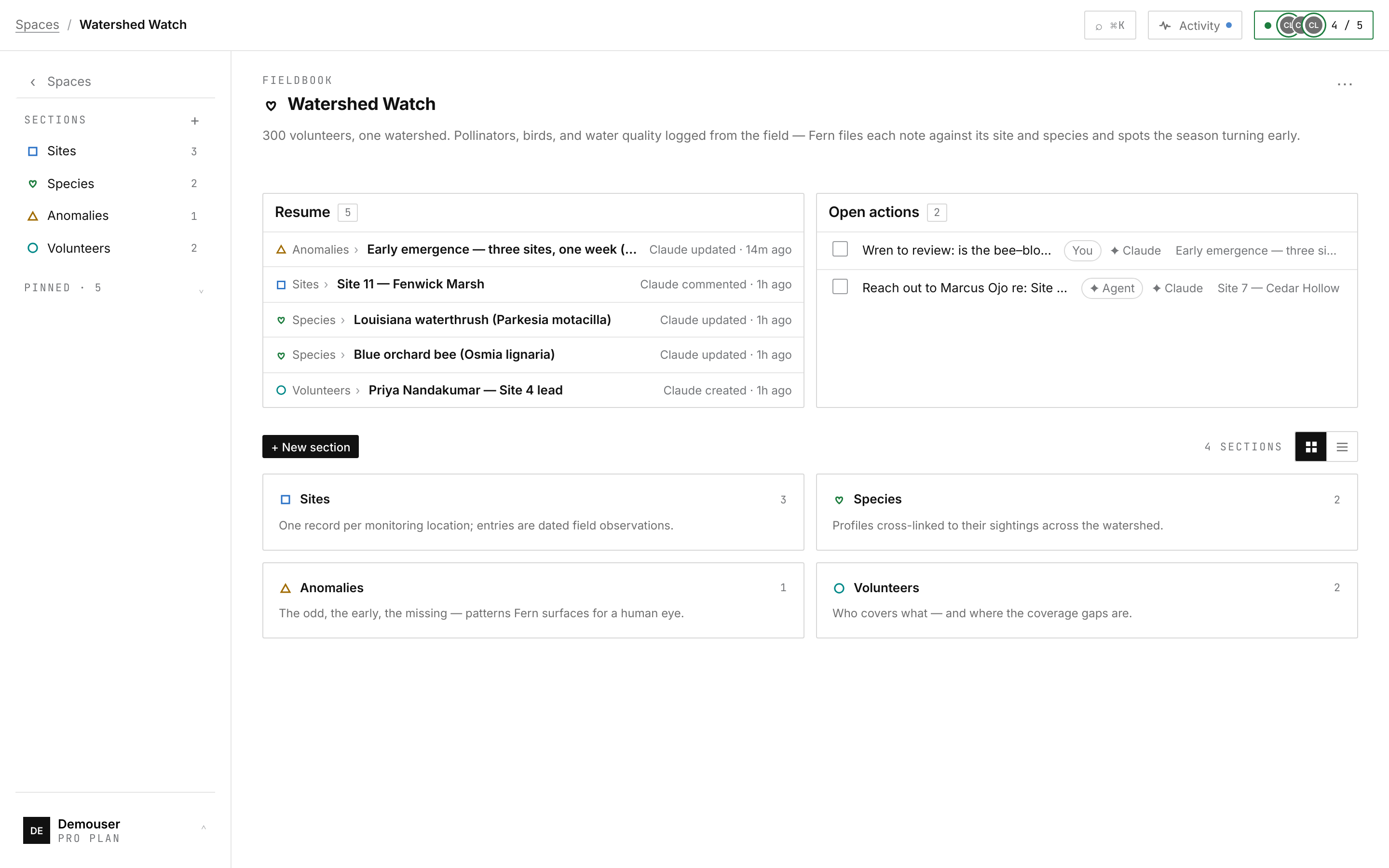
The observations come in all night, the way weather does. A photo of a mason bee on cold brick. A voice note — they're back at site 4, way early this year. A water pH reading typed with wet gloves. By 06:30, when the coordinator opens the briefing with the first coffee, the night's field reports are already filed: each one under its site and species, photos thumbnailed, repeat sightings linked to the last time anyone saw that species at that bend of the river.
Coordinating three hundred volunteers who monitor pollinators, birds and water quality across a watershed is one of those roles the green-jobs decade keeps minting — equal parts ecologist, logistics officer and community organizer. The volunteers are the easy part; people show up for rivers. The hard part has always been the data: hundreds of observers producing thousands of messy, heartfelt, wildly unstandardized notes, and one coordinator supposed to turn that into science. For years the honest workflow was a spreadsheet, a winter of copy-pasting, and the quiet knowledge that most of what people saw never made it into the record at all.
The filing is the agent's job now. It reads each capture as it lands and does what a research assistant would: right site, right species, photo attached, linked to the observation history. Volunteers are never asked to fill in forms — the forms were always where enthusiasm went to die. People send what they see, in the words they'd use over a fence, and the structure happens after, without them.
Structure is what turns anecdote into signal. When three separate captures mention early emergence in the same fortnight, the coordinator can ask the workspace for everywhere volunteers said anything like that this spring — search runs on meaning, so way early, weeks ahead and never seen them before May all answer the same question. What used to be a hunch assembled over a season becomes a query with results before the toast is done.
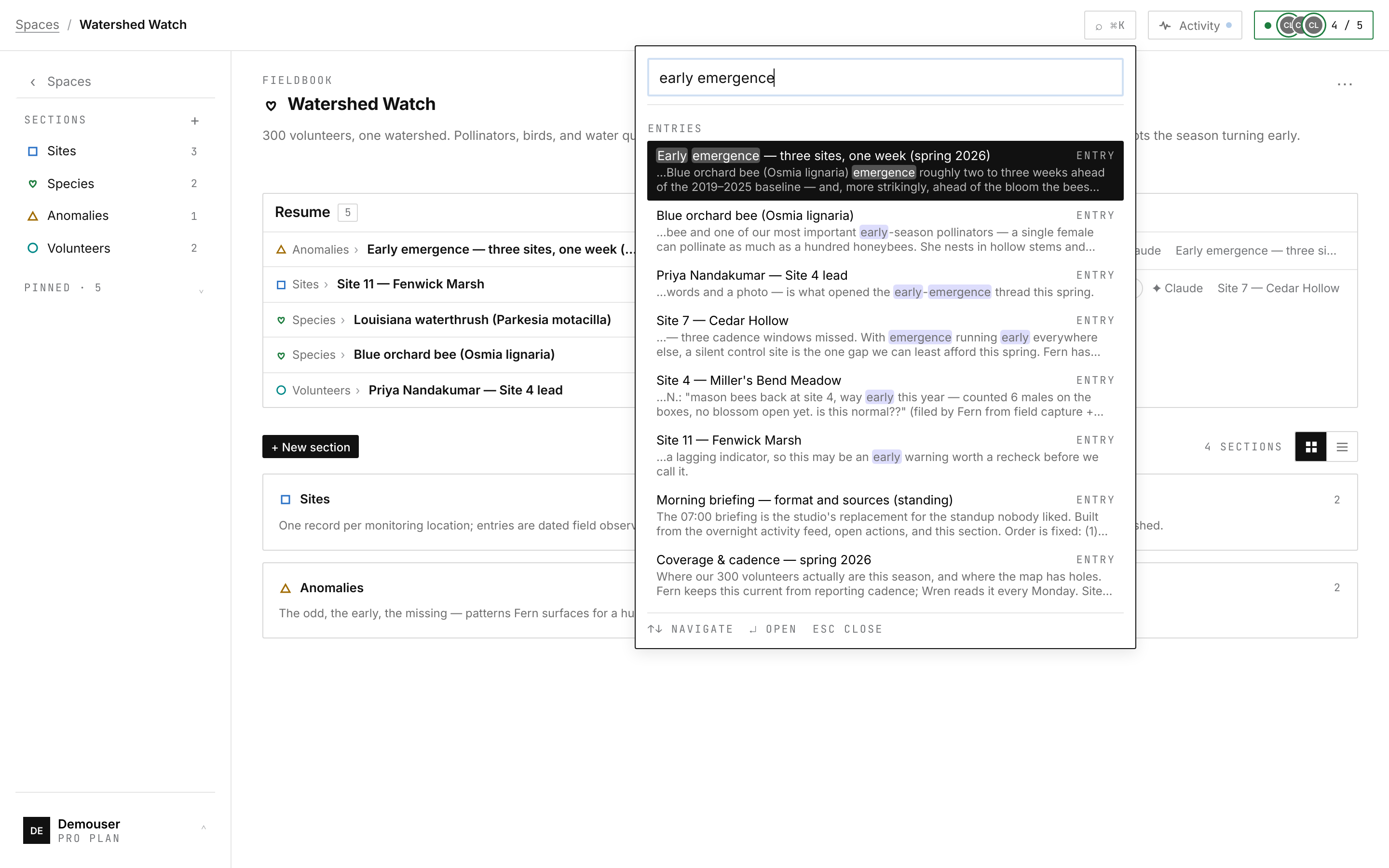
The briefing is the field dashboard: what came in overnight, what looks anomalous, which sites have gone quiet. Site 7 went three weeks without a report in April; that surfaced as a data gap, became an action assigned to the area's volunteer wrangler, and turned out to be a retired observer nobody had thanked recently. The dataset stays honest in the other direction too — when a volunteer corrects a misidentified bird, the fix arrives as a new version, signed, with the original preserved underneath. A dataset that remembers its mistakes is a dataset you can publish from.
The best morning of the spring, the agent left a note on the surprise shelf: three sites, same week, same early-emergence pattern — plotted. That is the moment this kind of work exists for, the click when scattered attention becomes one observation. It went to the county ecologist by lunchtime, with every underlying capture linked, attributed to the volunteer who logged it.
The mason bees were twenty-three days early this year, and the watershed knows it — not as a story people tell, but as a signed, sourced fact three hundred people built together, one wet-gloved note at a time.